
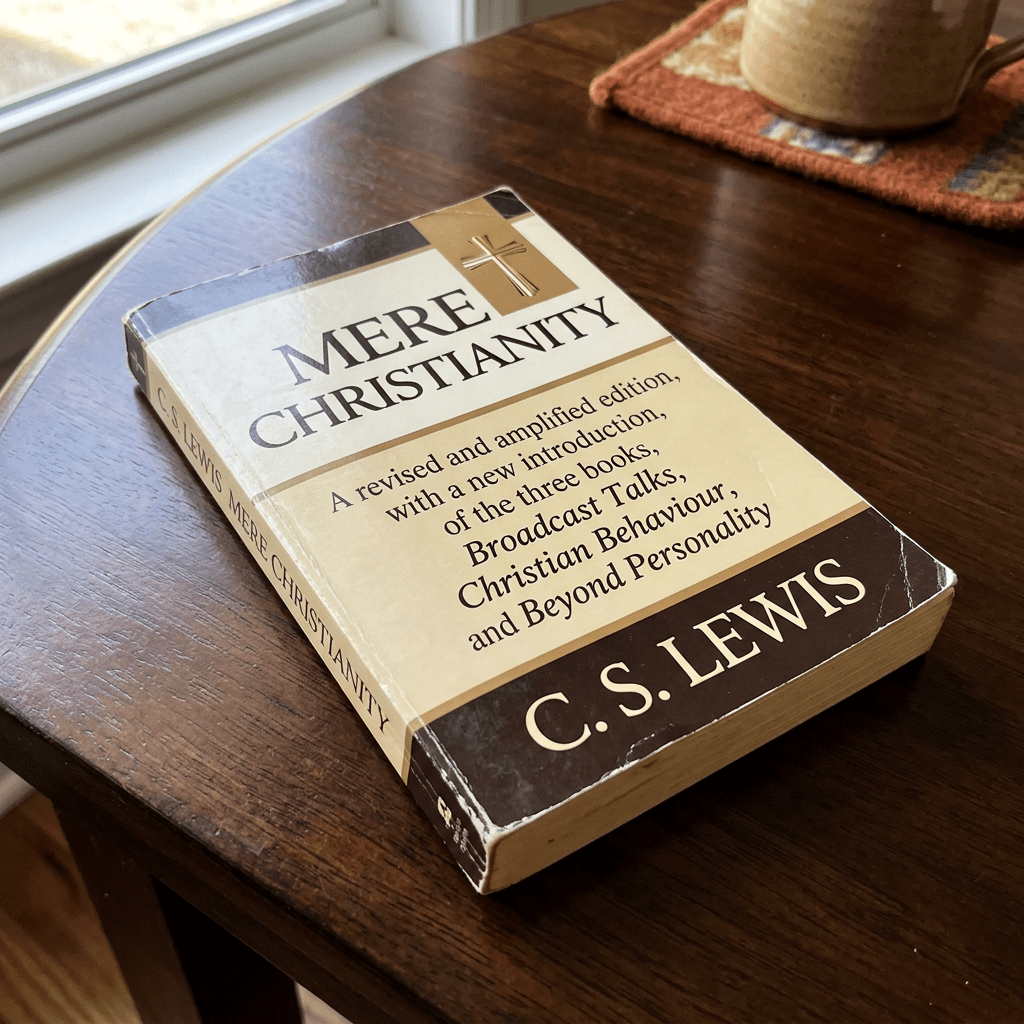
C. S. Lewis’s Mere Christianity is one of my favorite books. Lewis had a gift for explaining and defining Christian truths for both those who believe and those who do not. One of his tactics for expounding the Christian faith was presenting two different meanings to a thought or concept. His logic would look like this: If by this doctrine you mean “X,” I would affirm such thought in accordance with the faith. However, if by this word you mean “Y,” that would fall outside the bounds of biblical orthodoxy.
In all my studies and years, I do not consider myself to be on the same level as C. S. Lewis. But I have come to use this approach and reasoning for both faith and practice. One area that comes to mind are the conversations with people who say phrases like these: “I grew up Christian,” “I have always known God,” or “I have always been a believer.” As a pastor who converses with many people, these are commonplace in my discussions.
Allow me to use a Lewis type structure to respond to these types of phrases (for the record, this is the reason one of my mentors used to say, “be clear and concise” because words mean things). If what you mean by that is you were saved at a young age and cannot remember a time when you did not have Christ because of your age, these phrases would be considered acceptable. It is true that there are some people who were saved very young by God’s grace. One of our prayers for our children is: “Lord, save them at a young age so you can grow and use them for many years.”
The phrase, “I have always been a believer” in this context makes sense. We all know that we don’t remember every detail from our younger days because our minds were still growing and learning to retain information. Those early years of life are remembered only through pictures and the stories of our parents. Yet, the biblical truth remains. I was lost but found by God’s grace when I put my faith in the work of Christ before my core memories were developed.
Now, if what you mean by “I have always known God,” is the belief that you have always been a believer since birth; then, that would be considered unbiblical. The Bible is clear. We were born sinners (see Psalm 51:5; Romans 3:10, 23; 5:12; and Ephesians 2:1-3). Every person is born with a sin nature and is prone to walk in rebellion against God. No one is born good. Not a single person is born a Christian.
If this were true, it would be against the gospel of grace and the exclusivity of the gospel. That notion would indicate that Jesus’s sacrifice was not for all people, but only those who weren’t born Christian or naturally good. However, the Bible affirms salvation by grace through faith in the work of Jesus. Everyone at one point in life is (for the lost person) or was (for the believer) in rebellion and sin against God. The grand narrative of Scripture is that God sent his Son to save us while we were still in our rebellion, sin, and state of defiance.
The good news of the gospel is that anyone (yes, any person on the planet no matter how rebellious they have been) can turn from their sin and trust in his Son, Jesus Christ. As Christians, we would do well to ensure that we use words in the right way or with precision and clarity so that we don’t confuse the message and hope of the gospel.
Don’t miss Jeremy’s next post. Enter your email below to have it delivered straight to your inbox:

Rethinking Fairness in Everyday Life: When Grace and Injustice Collide
These three scenarios are real experiences, but I have changed some of the details to protect the innocent. By “innocent,” I am not talking about those without sin, but rather those who did the right thing and were seemingly punished on behalf of those who did wrong. Think of this like I am innocent when…


Visionary or Integrator? Lessons from Rocket Fuel for Church Leaders
Wickman, Gino and Winters, Mark C. Rocket Fuel: The One Essential Combination That Will Get You More of What You Want from Your Business. Dallas, TX: BenBella Books, Inc. 2016. We have all heard the saying, “Opposites attract.” Think of this statement like the experiment many of us did in grade school with magnets. Remember…

Biblical Reasons to Change Churches: When Pastors Are Unqualified
This is post number three in this series on biblical reasons for changing churches. Jesus Is the Hero of Scripture From the outset, Jesus is the hero of Scripture. He is the lamb of God who takes away the sins of the world. He is our Lord, Savior, and greatest Treasure. The Bible, nevertheless, contains…


