

The act of suicide is heartbreaking for many reasons. First, the person who committed the act believed that the only way out of whatever troubled them was by prematurely ending their life. Second, those who are left behind must deal with the many emotions, questions, and uncertainties as they process the loss of their loved one. Third, people who are made aware of the situation like to chime in with their own comments about what happens to a person after they kill themselves. Can a person who commits suicide go to heaven or are they destined for eternity in hell? Answering this question will be the primary focus of this post.
Thinking of Taking Your Life? GET HELP!
Let me be clear from the outset: if you find yourself in a situation where you think that the only way out is death, get help. No situation, no circumstance, no emotional state, no mental problem should lead you to believe that suicide exists as your only option. There are people in your life and professionals you may not know who want to and are willing to help you. There are people who will lovingly walk you through whatever it is you are dealing with; you just need to be courageous enough to share whatever it is that is generating these thoughts of suicide with them.
I also want you to know that there is hope in Jesus. Jesus commands us to cast our cares upon him (Matthew 11:28). Jesus wants to carry your heaviest burdens while simultaneously giving you rest. Jesus promises that he is going to return and make all things new. He will put all things in their proper place including your thoughts and emotions. When you put your trust in Jesus’s perfect life, sacrificial death, and victorious resurrection (by the way, he traded places with you so that you could live), he makes you a new creation. If you are reading this post and considering suicide, I plead with you, “Do not be afraid to reach out for help.”
A Biblical Response to Common Answers on Suicide:
One of the main questions that is often asked is, “Does suicide prevent someone from going to heaven?” Depending on your upbringing and theological origins, you might have heard a variety of answers to this question. Allow me to respond to the two most common answers, rebut them with Scripture, and provide what the Bible actually teaches in answering this question.
A. They are not saved because they were unable to ask forgiveness for their sin.
This response typically comes from those who have grown up with some form of sacramental system. For example, some believe in what is often referred to as “Last Rights.” This sacrament allows the dying person to confess their sin and get right with the Lord before they breathe their last breath. Although not always the case, this view can generate the idea that if you don’t confess all your sins prior to your death that you will be unable to enter God’s presence.
Nowhere in Scripture do we see some type of “Last Rights” ritual. In fact, the Bible affirms throughout its contents that the only way into God’s presence is by turning from sin and trusting in the work of Jesus Christ at any point prior to one’s death. Jesus asserts, “I am the way, and the truth, and the life. No one comes to the Father except through me” (John 14:6). The Bible explicitly teaches that salvation comes through (and only through) Christ’s sacrifice.
Think about the thief on the cross. He didn’t have time to get baptized or to do some type of “Last Rights” ceremony before he died. He just believed in Jesus who was dying right beside him for his (the thief’s) sins. All the rebellious things that put the thief on the cross were taken care of by the God/Man on the cross next to him. The thief recognized what Christ was doing for him, and made a faith statement, “Jesus, remember me when you come into your kingdom” (Luke 23:42). Jesus replied to the thief’s faith with the truth that, “Truly, I say to you, today you will be with me in paradise” (Luke 23:43). Salvation–entering into God’s presence–does not come through our work, but the gracious work of Jesus.
Since a person’s salvation depends on their faith in Jesus and subsequent turning from their sin, a suicidal act does not preclude someone from entering into Jesus’s presence. This one act does not mean they can’t be saved. However, we must be aware that the Bible never commends nor condones suicide. It has always been, is, and will always be a rebellious act that goes against God’s moral standards and character (see John M. Frame, The Doctrine of the Christian Life, pp. 738-739). God is a God of life not death but grants eternal life through the death of his son–Jesus. So, the Bible actually teaches against the notion that people who commit suicide aren’t saved because they were unable to ask for forgiveness. Faith in Christ is the only way into God’s presence.
B. Suicide is the unpardonable sin.
This response typically comes from a wrong interpretation of Matthew 12:31-32. Inserting suicide in this text has been passed down via word of mouth. I’m not sure where it originated, but when speaking with people on this subject, I often hear, “Suicide is the unpardonable sin.”
The only place in Scripture that speaks of an unforgivable sin comes out of Mattthew 12:2-32. Jesus states, “Therefore I tell you, every sin and blasphemy will be forgiven people, but the blasphemy against the Spirit will not be forgiven. And whoever speaks a word against the Son of Man will be forgiven, but whoever speaks against the Holy Spirit will not be forgiven, either in this age or in the age to come” (Matthew 12:31-32). Clearly, Jesus teaches that there is a sin called “blasphemy against the Spirit” that God cannot forgive. Yet, nowhere in this passage is the word or implication of suicide found.
What is the unforgivable sin? This passage shows Jesus confronting the Pharisees who are saying that “it is only by Beelzebul [Satan] the prince of demons, that this man casts out demons” (Matthew 12:24; Luke 11:15). Attributing the work of Jesus to Satan seems to be a blasphemy against the Spirit, which means it is unforgivable. For those of you with sensitive consciences (like me), I would like to share with you what my systematic theology professor, Dr. Keith Whitfield, once said in class, “If you are afraid you have committed this sin even unintentionally, you probably haven’t.” The point is that suicide is not even referenced in this text so clearly cannot be the unpardonable sin.
In addition, we need to be aware of the heart behind the comment, “it is only by Beelzebul [Satan] the prince of demons, that this man casts out demons” (Matthew 12:24; Luke 11:15). What kind of faith would attribute the work of Christ to Satan? One who has unbelief in their heart. This statement, like the thief on the cross, is a faith statement. The underlying faith for this unforgivable sin is that Jesus is not the Son of God. In other words, a complete rejection of who Christ is and the work he did on behalf of fallen humanity. Therefore, blasphemy against the Holy Spirit is motived by unbelief.
From this text, the Bible responds with the truth that suicide is not the unpardonable sin. Is suicide a result of one’s sin or a result of our fallen condition? This seems to be an accurate depiction of fallen humanity. But is suicide the unpardonable sin? The Bible responds in the negative.
Concluding Thoughts:
The point in posting this biblical response to suicide is to help you see that only one decision in our life has eternal consequences: placing your faith in the perfect life, sacrificial death, and victorious resurrection of Jesus. The cross covers our sins: past, present, and future. Only by faith in Christ we can enter into God’s presence as redeemed sinners.
Suicide is never commended in Scripture and breaks with God’s commands. This act will leave a wake of devastation. Therefore, I want to reiterate, if you struggle with suicidal thoughts or are contemplating committing this act, get help now, be courageous, think about the pain this act will cause on those around you who love you, and realize that everyone would rather help you work through your situation than live life without you in it.
Enter your email to subscribe to beimitators.com here:
A Holy Spirit Led and Empowered Movement: A Story About God’s Favor at FBC Holland
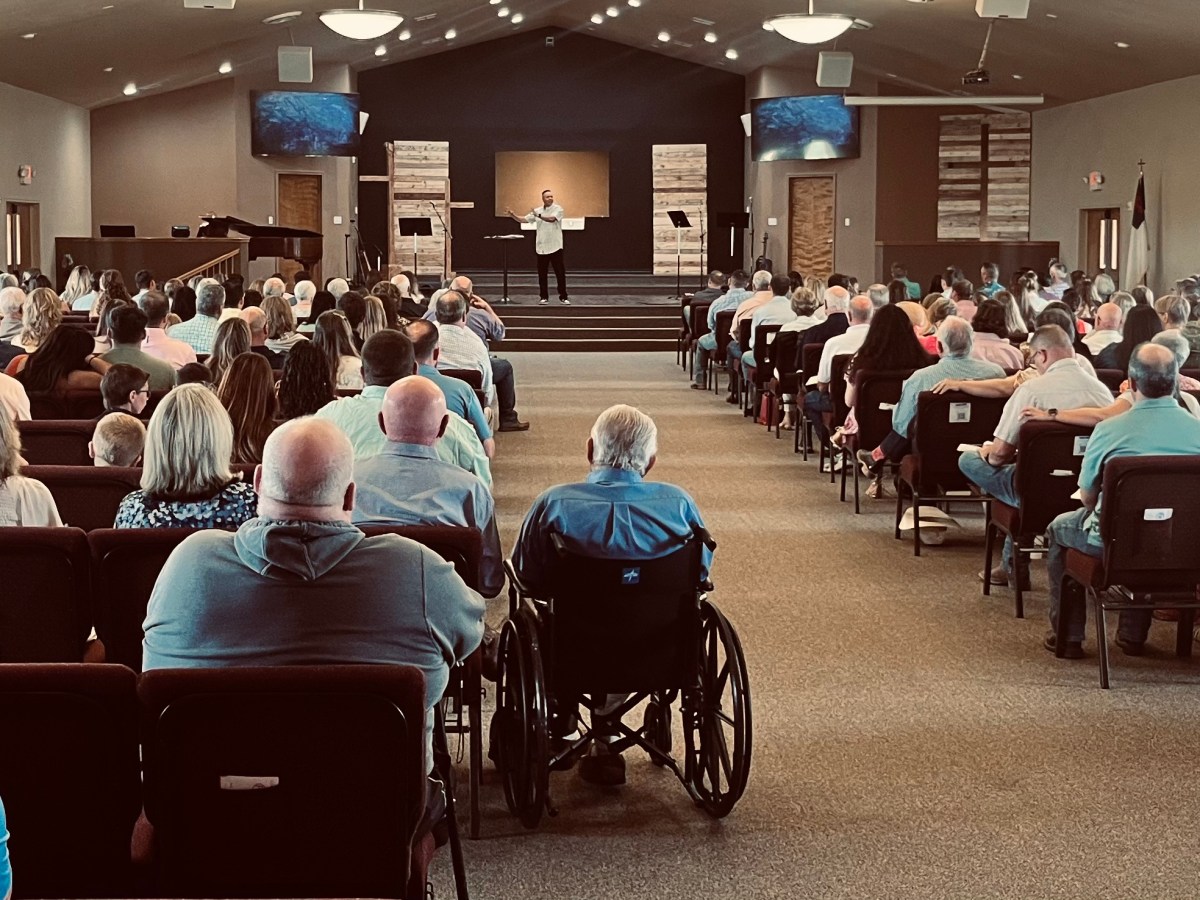
A dear friend of mine was in town recently, and I was sharing with him all the work that God is doing at First Baptist Church of Holland, in Holland, Texas. Yes, you’ve probably never heard of us. If you drove through our town, you most likely would not even realize you were in it.…


One Preacher’s Process for Preparing A Sermon
One question pastors like to ask each other is: “How do you prepare your sermons for Sunday?” The responses differ based on personality, capabilities, experience, and time constraints. For example, Jim Shaddix used to prepare all week for his sermon. John Piper studies and writes his on Friday. Joby Martin spends all day Monday getting…

THE ERLC NEEDS REFORM RATHER THAN BEING ABOLISHED
We are weeks away from thousands of Southern Baptist messengers migrating to Dallas, Texas for the annual Southern Baptist Convention (SBC). Southern Baptists hold to the autonomy of the local church. Unlike a denomination, which consists of a top-down organizational structure, the SBC has a bottom-up polity. Local and like-minded churches choose to partner with…

 Be Imitators
This is a great topic to get clarification on, not only for myself, but for anyone in the future who i encounter that may grieve from such loss.
LikeLike
I’m glad you found this information helpful. Thanks for leaving a comment.
LikeLike