

One question pastors like to ask each other is: “How do you prepare your sermons for Sunday?” The responses differ based on personality, capabilities, experience, and time constraints. For example, Jim Shaddix used to prepare all week for his sermon. John Piper studies and writes his on Friday. Joby Martin spends all day Monday getting his together. James Merritt prepares four weeks in advance. As you can see, sermon preparation is not a one size fits all model.
Two quick notes:
First, I will share what my ideal week of sermon preparation looks like. I do my best to protect this time throughout the week. The staff who works alongside me helps hold me accountable and limits outside interruptions when in the study. Second, the rest of the day is spent on administrative tasks like: staff meetings, counseling, pastoring, and vision casting. As much as I would love to sit and read, write, and study as an office hermit, I know that I need to spend time with God’s people and lead them into his direction for his church.
What follows is my process that I hope will help you create your own system for developing biblically based sermons for God’s people. My method resembles Dr. Shaddix’s because he was my preaching professor at Southeastern Baptist Theological Seminary. I have provided the time of day and the tasks I complete at each step.
Monday Morning
Since I am coming out of Sunday and experiencing ministry fog, I spend most of this day doing two things: 1. Reading through my Bible reading plan, and 2. Reading over the text I will preach as many times as possible. Reading through the Bible reminds me how Sunday’s text fits into the grand narrative of Scripture. My goal is to not lose sight of the forest when studying the tree. Multiple readings of the text allow me to observe the grammatical structure, historical context, and theological truths within the passage. As I read, I am always looking for gospel connections.
Tuesday Afternoon
Alistair Begg once said, “I pray myself ready, read myself full, write myself empty, and pray myself hot.” Tuesdays are spent reading myself full. I read commentaries, books, chapters of books, book summaries, sermons, and do research on the passage I will deliver on Sunday. At the end of this time, my goal is to have the main idea of the text and the main idea of my sermon in 15 words or less–thank you, Dr. Shaddix.
Wednesday
Nothing. Yep, you read that right. No sermon preparation on Wednesdays. I just let my brain sit and marinate on all that I have read and studied. This “off day” allows my mind just to think on the material. Here is some advice I received from Tony Merida–keep a pen and notebook with you during this time. When something pops into your mind, write it down in preparation for the next day.
Thursday morning
Write a full manuscript. I get to the office pretty early on this day, and I don’t leave my desk until I have a completed draft of the sermon saved on the computer. This time is spent shaping the main idea of the sermon by explaining, illustrating, and applying the text. I’m breaking the text down into “points” that help the people see from the Bible the main idea. In addition, I try to answer what I think might be some objections from either believers or unbelievers. I develop an appealing introduction to explain why the audience needs to listen, show how the text points to Jesus and his plan of salvation for sinners, and a call to action for both believers and lost people. All the prep work before “writing day” determines how long the writing process will take.
Friday
Nothing. This is my day of rest. I don’t touch the sermon on Fridays. This rhythm of work and rest helps me to disconnect from the manuscript. My brain reboots, which is important for the next step.
Saturday morning
Editing and finalizing the draft. When I come back to the sermon manuscript after leaving it for 24 hours, it seems that I have fresh eyes when editing the sermon. Things that I thought sounded like a modern day Charles Spurgeon on Thursday make no sense to me on Saturday. So, it gets cut. This day helps me subtract thoughts, illustrations, or applications that detract from the main idea of the text. I also find areas that either need to be clearer, explained better, or supplemented with an illustration. This is one of the hardest but also most important steps in my sermon preparation. By lunch time, the manuscript is complete.
Sunday morning
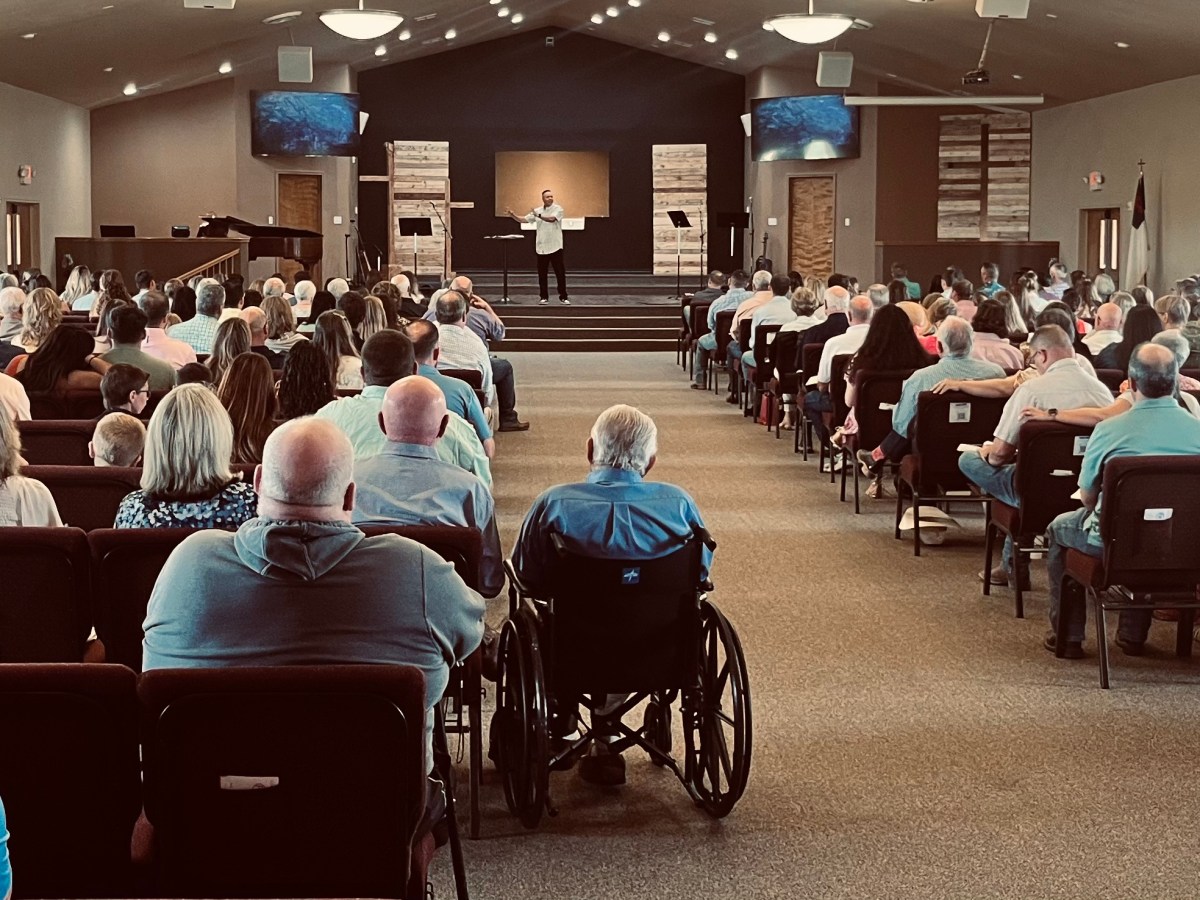
I arrive at church early to pray and move the sermon from “my head to my heart” as John Piper says. I read the manuscript out loud to myself. I conduct a mock sermon in front of a mirror without the manuscript to ensure that I have the core of the message from the text buried inside of me and watching myself helps me avoid any distracting mannerisms. I pray for the Spirit’s power, and I preach without notes. This allows the Spirit to use me as he sees fit. In other words, I desire the sermon to be led by the Spirit not by the script because I have done the preparation necessary for him to move in me.
Conclusion
Allow me to say it again: God has designed each one of us to be unique. Your process could be similar or different to mine, and there is nothing wrong with that. As long as you are rightly handling the Word of God, pointing people to Jesus, being filled with the Spirit, and providing appropriate application to the audience, keep using your gift to build up and equip the body of Christ.
I’d like to know how you prepare. Please comment on your process so we can all grow together for the glory of Christ and the advancement of his kingdom.
You do not want to miss Jeremy’s next post. Enter your email below to have it delivered to your inbox:
A Holy Spirit Led and Empowered Movement: A Story About God’s Favor at FBC Holland
A dear friend of mine was in town recently, and I was sharing with him all the work that God is doing at First Baptist Church of Holland, in Holland, Texas. Yes, you’ve probably never heard of us. If you drove through our town, you most likely would not even realize you were in it.…


THE ERLC NEEDS REFORM RATHER THAN BEING ABOLISHED
We are weeks away from thousands of Southern Baptist messengers migrating to Dallas, Texas for the annual Southern Baptist Convention (SBC). Southern Baptists hold to the autonomy of the local church. Unlike a denomination, which consists of a top-down organizational structure, the SBC has a bottom-up polity. Local and like-minded churches choose to partner with…

A Biblical Response to Suicide: What the Bible Actually Teaches?
The act of suicide is heartbreaking for many reasons. First, the person who committed the act believed that the only way out of whatever troubled them was by prematurely ending their life. Second, those who are left behind must deal with the many emotions, questions, and uncertainties as they process the loss of their loved…

 Be Imitators