

Beza’s Approach to Training Pastors
Theodore Beza may not be a household name for many contemporary evangelicals. One reason, out of many, is that he followed the ministry of John Calvin in Geneva, Switzerland. Even though Beza stands in the shadow of one of the greatest reformers of the Christian faith, it is my intention to pull him into the spotlight for those who read this post.
This preacher had a heart for the Lord, those he pastored, and those he discipled to become preachers of God’s Word. Yet, his focus for those who were called to the ministry of the Word can be boiled down into two parts. Joel R. Beeke in his book Reformed Preaching: Proclaiming God’s Word from the Heart of the Preacher to the Heart of His People, summarizes Beza’s thoughts when he writes, “The first qualification of a preacher is personal piety and an exemplary life. Then he must labor to draw out the meaning of the biblical text in the original languages, comparing Scripture to Scripture to make a proper interpretation” (pp. 138-39). In other words, personal holiness and the correct handling of God’s Word were essential elements for those called into pastoral ministry.
For this blog article, I would like to focus on the importance of handling of Scripture that Beza articulates throughout his life and ministry. The character qualifications–what Beza means by personal piety–for a pastor can be read in 1 Timothy 3:1-7 if you are interested in learning about what God requires for those called into ministry. By the way, the only qualification for a preacher that is not character related is that he must be “able to teach” (1 Tim 3:2).
Beza, as well as many preachers from the Reformation leading into Puritanism, required a minster of God’s Word to have a firm grasp on the biblical languages. For a little Bible trivia, the Old Testament was primarily written in Hebrew and the majority of the New Testament was written in Greek. Theodore Beza trained pastors to labor in the Word of God by studying it in the original language and applying the hermeneutical principle of Scripture interprets Scripture.
Beza’s Training Taken As A Challenge
What a challenge for those of us who handle God’s Word in our contemporary context. We must come back to the notion that preaching requires the laborious study of God’s Word, which includes a study of the Bible in the original languages. This is why many Master of Divinity programs require (at a minimum) 6 credit hours of Greek and Hebrew. This is not a rite of passage for a preacher, but rather the tools required for properly handling God’s Word and delivering it correctly to God’s people.
Of course, this takes a lot of time and commitment. I remember my final Greek exam where I was required to correctly translate Mark 8 from Greek to English. It took me 8 hours to finish. Yet, the Holy Spirit illuminated that passage of Scripture to me as I studied and translated God’s special revelation of himself to me from the original language. It was like directly reading a handwritten letter by a dear friend.
My study of Beza has challenged me to continue to translate and work with God’s Word in the original languages. I have reopened my Greek primer, my Greek New Testament, and bought Köstenberger, Merkle, and Plummer’s Going Deeper with New Testament Greek: An Intermediate Study of the Grammar and Syntax of the New Testament. As a preacher and teacher of God’s Word, I desire to devote myself to study it, allow God to change me, and through the power of the Holy Spirit, watch him transform those who sit under my preaching.
Responding to Criticism
I can hear some of the critiques for those who think this is a bit too academic for the office of pastor or unnecessary for those in the pulpit. Many years ago, I read John Piper’s Brothers, We Are Not Professionals: A Plea to Pastors for Radical Ministry. Piper introduces a book from the 1960s that was published by Heinrich Bitzer, a banker. The book was designed “to help pastors preserve and improve their ability to interpret the Bible from the original languages” (p. 81). Piper explains that without the original languages in our tool belts pastors lose confidence, grow in uncertainty by depending on the translations of others, repackage what others have already said, and are prone to exegetical fallacies (pp. 82-84). Therefore, may the study of the Bible in its original languages become a priority for those who are called to protect God’s people from heresy and feed God’s sheep a healthy diet of good theology (John 21:15-19).
Final Thoughts
The study of Scripture in the original languages seems to be highly valued not only by contemporary theologians like Piper, but also by those who were called to preach the Word throughout Christian history. May we, preachers of God’s revelation to fallen but redeemable humanity, take the historical lessons from Beza as a challenge for preaching God’s Word to God’s people in the present through the study of Scripture in the original languages.
A Holy Spirit Led and Empowered Movement: A Story About God’s Favor at FBC Holland
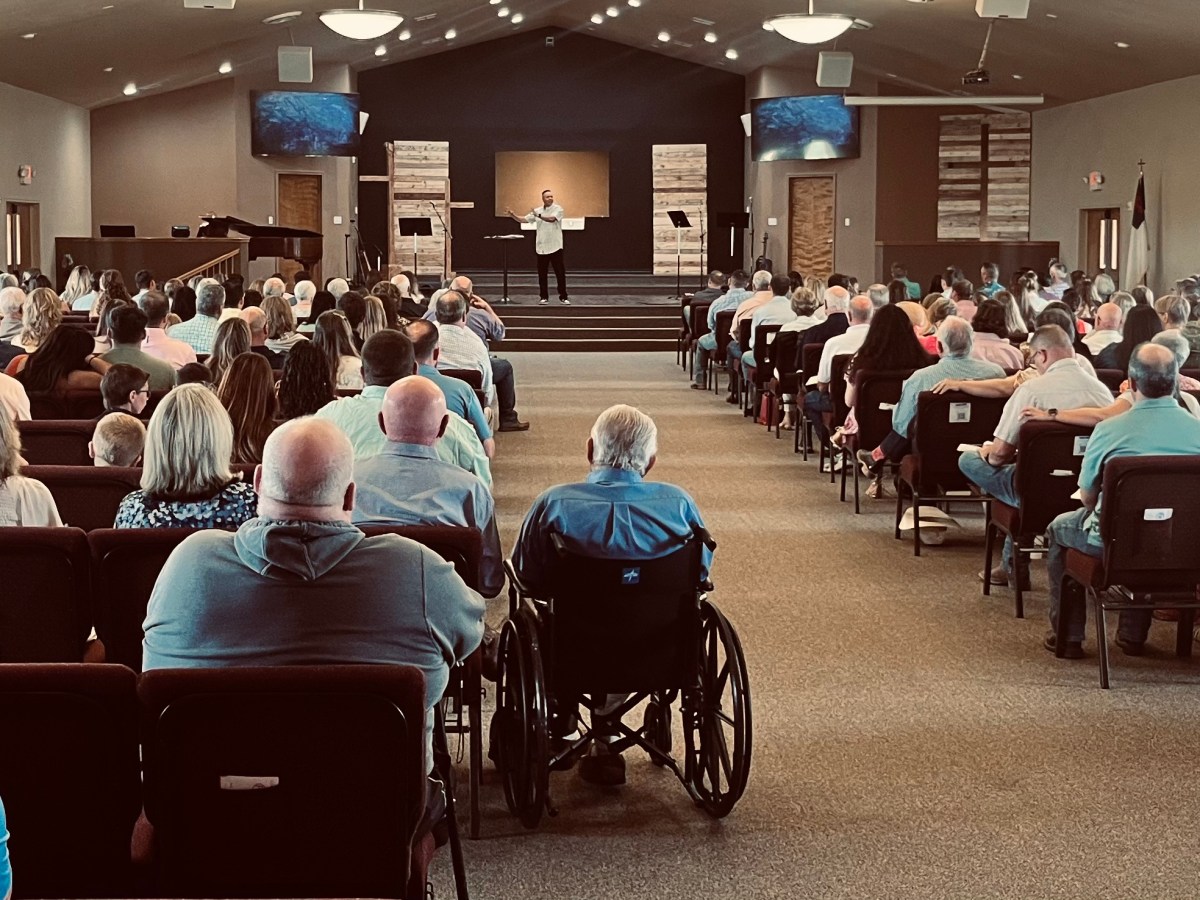
A dear friend of mine was in town recently, and I was sharing with him all the work that God is doing at First Baptist Church of Holland, in Holland, Texas. Yes, you’ve probably never heard of us. If you drove through our town, you most likely would not even realize you were in it.…


One Preacher’s Process for Preparing A Sermon
One question pastors like to ask each other is: “How do you prepare your sermons for Sunday?” The responses differ based on personality, capabilities, experience, and time constraints. For example, Jim Shaddix used to prepare all week for his sermon. John Piper studies and writes his on Friday. Joby Martin spends all day Monday getting…

THE ERLC NEEDS REFORM RATHER THAN BEING ABOLISHED
We are weeks away from thousands of Southern Baptist messengers migrating to Dallas, Texas for the annual Southern Baptist Convention (SBC). Southern Baptists hold to the autonomy of the local church. Unlike a denomination, which consists of a top-down organizational structure, the SBC has a bottom-up polity. Local and like-minded churches choose to partner with…

 Be Imitators