

Have you ever heard of Bruce A Little? Unless you are a graduate of Southeastern Baptist Theological Seminary or have engaged in philosophical thought at an academic level, you have probably never heard of him. He is by far one of the most challenging professors I have ever studied under, but also the person who taught me a plethora about how to think critically and write well. Little’s influence can be observed through the numerous books and articles he has published on Christian thought. He also teaches God’s Word throughout the world.
Interestingly, Little has no social media presence. He doesn’t have a Twitter feed with a million followers or Facebook or Instagram or a TikTok account to extend his influence and promote his “brand.” Yet, God has used him to teach his Word in the United States of America, Ukraine, and throughout Europe. How did this happen? What can we take away from Little’s faithful ministry and service to King Jesus about influencing others for the glory of God?
First, allow your work to speak for itself.
Leland Ryken in his book, Redeeming the Time, claims, “Convinced that work bore God’s approval, the Reformers extolled diligence in work as one of the primary virtues of the Christian life” (p. 102). He continues, “Work [according to the Protestant ethic] glorified God and benefited society” (p. 106). Diligence, glorifying God, and benefitting society should be recovered in the Christian life as it pertains to our work ethic and building a brand. In other words, let your work speak for itself. When you work hard, seek to glorify God through it, and create to make society better. People will naturally notice God honoring work.
Think of it like this. When I was growing up, I was obsessed with basketball. My younger days were filled with “smack talking” to other players on the court–sometimes, even my own teammates. My father pulled me aside one day after a game and said, “Son, you don’t need to talk smack to get attention, but rather your game should do the talking.” We don’t need social media or self-promotion to highlight all the “great things we have done for the Lord.” Instead, we need to embrace that our faithfulness and working for God’s glory speaks for itself. Working for the glory of God and the welfare of others will allow God to build your audience.
Second, allow God to build your platform.
Sometimes we have a tendency to promote ourselves instead of allowing God to build our platforms. Could this type of self-advancement go directly against God’s sovereignty? Scripture consistently reveals God using people who were seemingly “nobodies”–of course, there are exceptions to this thought–to do great things. We see in Scripture that God came to Abram who has relatively little said about his life prior to God’s call of becoming the father of a great nation (cf. Gen 11:27-32), Moses who fled from Egypt and questioned his own abilities to do the job God had called him to leading God’s people out of Egypt through extraordinary means (cf. Ex 3:11, 4:10), David who was forgot about by his own father during Samuel’s selection process becoming King of Israel (cf. 1 Sam 16:11), and Mary, the mother of Jesus Christ, who does not seem to be prestigious or popular when selected by God to care for God’s own Son (cf. Lk 1:26-38). The point is that God was the sovereign hand behind these platforms in Scripture.
From Scripture’s historical narratives, we should think about allowing God to build our platforms. I think the principle Jesus shares in the story of the talents helps us think through this point: be faithful with what God gives you, and allow his grace to build on the stewardship of your current platform (cf. Matt 25:14-30). Some may argue that social media provides them an outlet for God’s sovereignty to be on display, and while that might be true because God is sovereign over everything, we should ask if these platforms are the best means for promoting God’s glory (assuming that we can do that through these outlets) and avoid the many temptations associated with social media. Due to the nature of social media’s structure, I would argue (and have argued) that it is not the best means for platforming.
Third, allow time for character development.
Mike Cosper’s “The Rise and Fall of Mars Hill” podcast sheds light on the reality of what happens when charisma and self-absorbed platforming outgrow one’s character. From the outset, I have many questions and critiques about the creation of this content 7 years after the events of Mars Hill in Seattle, Washington. However, I think one of the positive outcomes from this podcast is the warning against building a platform before your character is ready to handle it.
According to Stephen’s sermon, Moses was 40 when he left Egypt. Forty years later he experienced the burning bush moment (cf. 7:23-30). This means that Moses was 80 years old before he began his service to the Lord. Think about that. Moses began to lead the people out of Egypt when he was in his eighties. Perhaps God needed to work on Moses’s character before he could use Moses to do some amazing things for his glory. By waiting on God to give us the platform he has in mind, God has time to develop us in the people and leaders he has called us to be. Character exists as an essential quality for ministry service (cf. 1 Tim 3:1-13). Christian influencers and leaders might do better if we spent more time allowing God to mold our character instead of spending time building our platforms. We should consider how character connects to our influence rather than building influence without character.
Conclusion: Little’s Example
Little exemplifies all of these traits. His work speaks for itself. He didn’t use self-serving tools to launch his ministry platform, and his character remains above reproach. It is for these reasons (and many more honestly) that he has served and taught God’s Word across the globe. May his life be an example for many of us who desire to faithfully serve God and make his grace and glory known on a massive scale.
A Holy Spirit Led and Empowered Movement: A Story About God’s Favor at FBC Holland
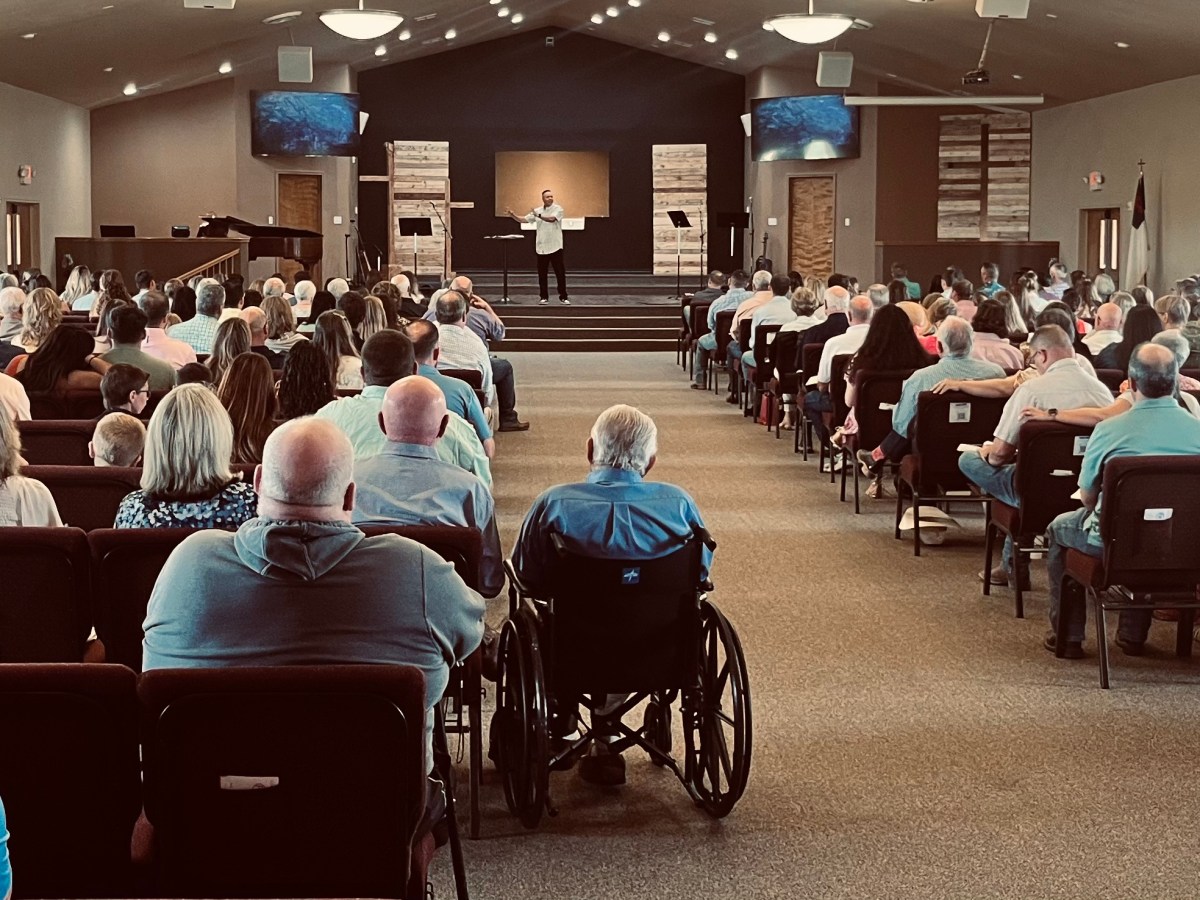
A dear friend of mine was in town recently, and I was sharing with him all the work that God is doing at First Baptist Church of Holland, in Holland, Texas. Yes, you’ve probably never heard of us. If you drove through our town, you most likely would not even realize you were in it.…


One Preacher’s Process for Preparing A Sermon
One question pastors like to ask each other is: “How do you prepare your sermons for Sunday?” The responses differ based on personality, capabilities, experience, and time constraints. For example, Jim Shaddix used to prepare all week for his sermon. John Piper studies and writes his on Friday. Joby Martin spends all day Monday getting…

THE ERLC NEEDS REFORM RATHER THAN BEING ABOLISHED
We are weeks away from thousands of Southern Baptist messengers migrating to Dallas, Texas for the annual Southern Baptist Convention (SBC). Southern Baptists hold to the autonomy of the local church. Unlike a denomination, which consists of a top-down organizational structure, the SBC has a bottom-up polity. Local and like-minded churches choose to partner with…

 Be Imitators