

All authority in heaven and on earth has been given to me. Go therefore and make disciples of all nations, baptizing them in the name of the Father and of the Son and of the Holy Spirit, teaching them to observe all that I have commanded you. And behold, I am with you always, to the end of the age.
King Jesus in Matthew 28:19-20
Dr. Daniel L. Akin, President of Southeastern Baptist Theological Seminary, likes to remind his students, “Last words are lasting words.” He is absolutely correct. Matthew’s Gospel ends with what pastors, theologians, and Christians have labeled as “The Great Commission.” The last three verses are Jesus’ final words before he ascended into heaven (Acts 1:9). Jesus’ last words are lasting words because he commands his followers to “make disciples of all nations.” These marching orders are still applicable for current Christians, which makes them binding and important words from King Jesus to his followers. In other words, the Great Commission is the calling of every believer given to us from the mouth of our Lord.
Many people have different methods for making disciples, and many processes for teaching others to be Great Commission Christians. As long as we stay in the category of “teaching them to observe all that I have commanded you,” we are abiding by the Lord’s directive with faithfulness (cf. Matt. 28:20). Nevertheless, perhaps we should consider the value of having our disciples value the power of the pen and paper–i.e., writing. The shallow end of the culture pool resides in our tweeting, emails, texting, emojis, and picture postings. We are writing in ways that no longer require us to dive into the deep end of our thoughts and come out the other end with coherent sentences that can be understood by others.
Maybe we need to rethink our discipleship models that include having our disciples embark on the art of writing and writing well. Here are 3 reasons to make your disciples write:
- Writing makes disciples think. Many people don’t like to write because it can be an arduous task. To be honest, looking at a blank screen or sheet of paper can be extremely terrifying because we have to take the thoughts swirling around in our brains and commit ourselves to slowing down long enough to write out these thoughts word for word. Yet, writing allows people to take a moment to really think about whatever they are writing about. Writing causes people to express with clarity what they are thinking into coherent and shareable prose, which can be daunting but also extremely transforming.
- Writing makes disciples retain information. The writing process requires thought and sharing those thoughts on paper or computer screen naturally leads to retention. For example, you will find many book reviews on this website because writing a summary and some critique on a book in 800 words or less makes me ensure I understood and can articulate what the author of that book was trying to convey to me as his or her reader. Writing helps the learning process of our disciples. As disciple makers, we are teaching the truths of Scripture, and we want our disciples to retain what they are being taught through the discipleship process.
- Writing makes disciples talk. When disciples have written out their thoughts and poured over their words, they are more likely to discuss what it is they are learning about God and what he is doing in and through them. Writing makes disciples better prepared to go deeper. The conversations with disciples who have taken time to write are much better opportunities for growth because they are more prepared for discussion and sharing. Even if they don’t know how to share their thoughts verbally with others, writing gives disciples an avenue to read from their work for the edification of the group. In addition, they will be given a written record to track how God is working in their lives. They will develop documents they can come back to in the future to see evidence of God’s working grace in their lives.
In some ways, we have lost the value of the written word, and that is a shame because the Word of God is in written form to us. Writing is a tool for thinking, retention, and communication. By making your disciples write, they are in a better position to learn from you all that King Jesus has commanded them to observe (cf. Matt. 28:20). Challenge and make them commit to writing in your discipleship process. The task might be difficult for some, but over time, they will see this was a valuable tool for their growth to become more like King Jesus.
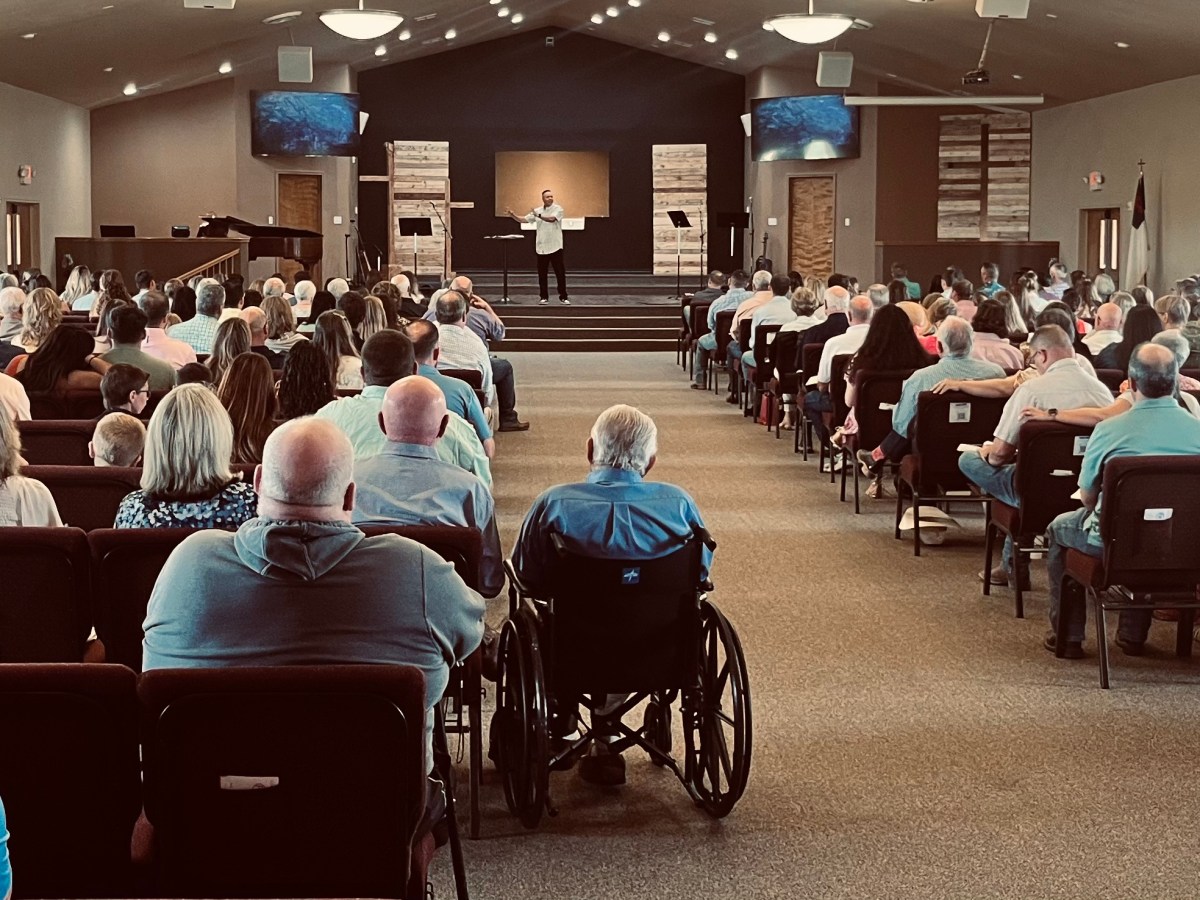
A Holy Spirit Led and Empowered Movement: A Story About God’s Favor at FBC Holland
A dear friend of mine was in town recently, and I was sharing with him all the work that God is doing at First Baptist Church of Holland, in Holland, Texas. Yes, you’ve probably never heard of us. If you drove through our town, you most likely would not even realize you were in it.…


One Preacher’s Process for Preparing A Sermon
One question pastors like to ask each other is: “How do you prepare your sermons for Sunday?” The responses differ based on personality, capabilities, experience, and time constraints. For example, Jim Shaddix used to prepare all week for his sermon. John Piper studies and writes his on Friday. Joby Martin spends all day Monday getting…

THE ERLC NEEDS REFORM RATHER THAN BEING ABOLISHED
We are weeks away from thousands of Southern Baptist messengers migrating to Dallas, Texas for the annual Southern Baptist Convention (SBC). Southern Baptists hold to the autonomy of the local church. Unlike a denomination, which consists of a top-down organizational structure, the SBC has a bottom-up polity. Local and like-minded churches choose to partner with…

 Be Imitators